

Production
See Sound
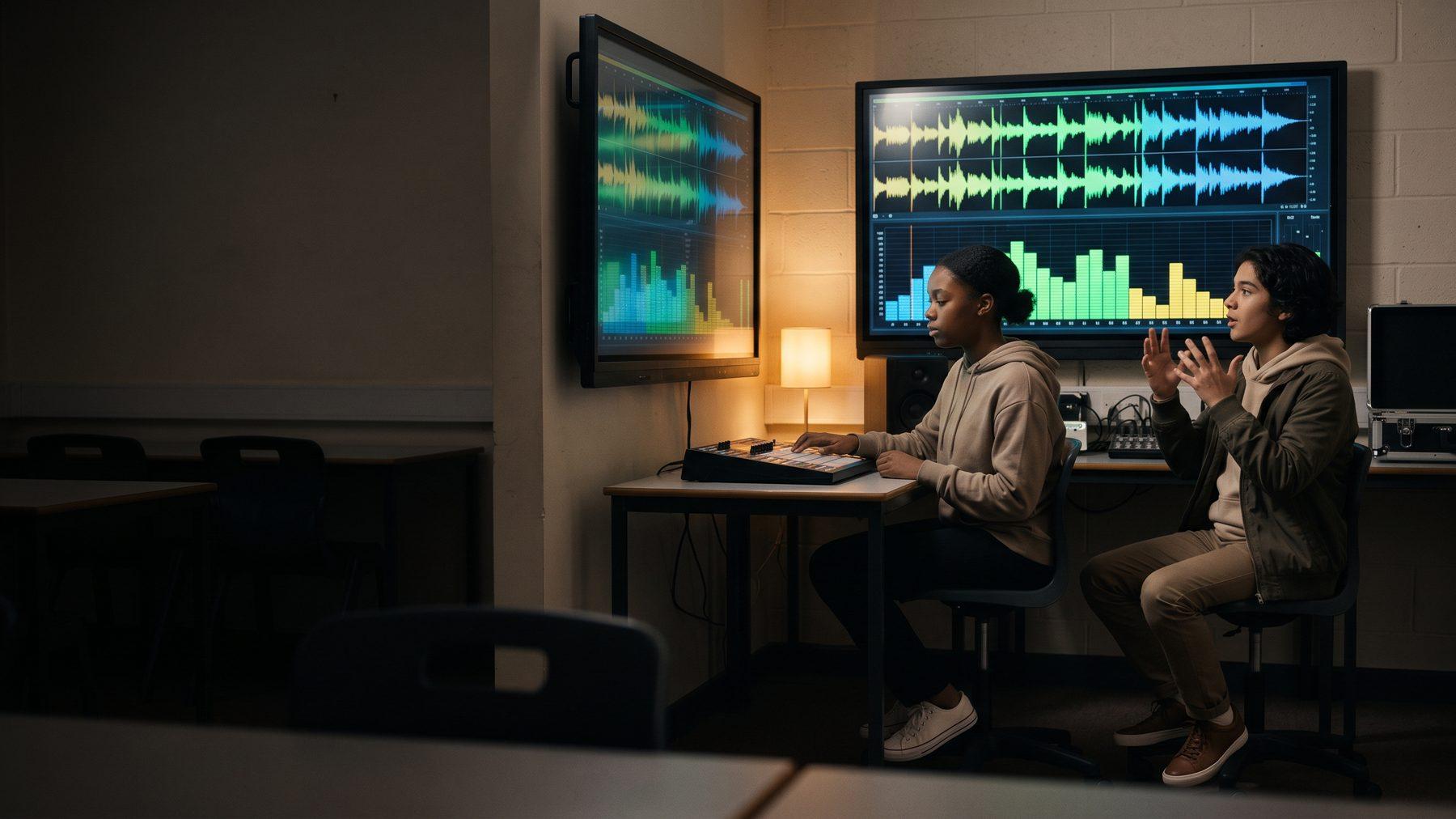
See Sound is a groundbreaking initiative redefining what music education looks and feels like for Deaf and Hard of Hearing (DHH) students. By blending music, science, and technology, the program transforms sound into a multi-sensory experience, where vibration can be felt, rhythm can be seen, and creativity can be fully expressed beyond traditional listening.
See The Sound. Feel the Beat.
Grades 3-12
Through immersive, hands-on learning environments, See Sound uses visual systems, tactile feedback, and experiential design to open new pathways into music. Students engage with sound through light, motion, frequency, and physical interaction, unlocking a deeper understanding of rhythm, pitch, and structure while building confidence, connection, and creative identity.
See Sound is more than a program, it is a movement to expand access and prove that music is not limited to hearing. It is something that can be seen, felt, and shared by all.
Student learning
What Students Will Do
Students learn by doing through hands-on activities, creative projects, collaboration, and real-world experiences designed to build skills, confidence, and meaningful connections to the program’s focus.
01
Understanding sound through vibration, frequency, and visual systems
02
Multi-sensory approaches to rhythm and music creation
03
Creative expression beyond auditory limitations
04
Exploration of music through technology and design
Real-world application
Expands access to careers in music, media, and technology while redefining inclusive design and innovation in creative industries.
How it runs
Program Specifications
Grades, delivery formats, and the pathways this program feeds: everything needed to check it against a master calendar.
- Grade range
- Grades 3-12
- Category
- Production
- Delivery formats
- In-SchoolDuring the instructional day. Pathway programming embedded in electives, advisory, or dedicated blocks.
- IntersessionBreaks and summer. Intensive multi-day creative sessions during off-calendar weeks.
- Professional Development
Student outcomes
What The School Gets Back
Every program is designed backwards from its finish. These are the things that exist at the end of it.
01
Increased access and inclusion in music education
02
Stronger creative confidence and identity
03
Enhanced sensory awareness and engagement
04
Development of alternative pathways into music and media
Related pathways
Where This Program Leads
Programs are how a pathway gets taught. These are the disciplines and career routes this one opens up.
Bring This Program to Your School
Tell us the grades, the block in the schedule, and the number of students you have in mind. We will come back with what See Sound looks like on your campus.